Inside the Silicon Triangle: How Three Tiers of Elite Manufacturers Secretly Build the World’s Electronics
SHENZHEN, China — Whether you are typing on a laptop, scrolling a smartphone, or adjusting a smart home device, there is a high statistical chance that the brand printed on the product did not actually design or manufacture the entire device.
Instead, it likely originated from a vast, highly coordinated global manufacturing network stretching across Taiwan, mainland China, and Southeast Asia. At the center of this system are Original Design Manufacturers (ODMs) — the invisible backbone of modern consumer electronics.
While global tech giants dominate branding, marketing, and retail presence, ODMs quietly handle engineering, prototyping, assembly, and large-scale production for some of the biggest names in technology.
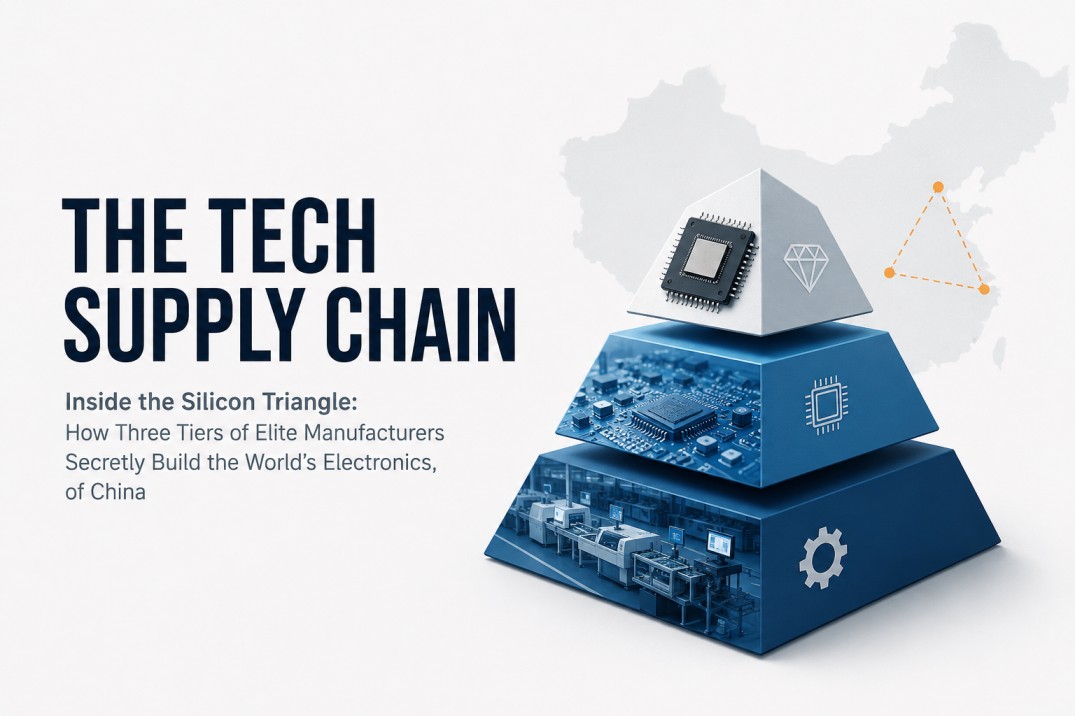
But the industry is not uniform. It is structured into a clear hierarchy often referred to as the “Silicon Triangle” — a three-tier system that determines everything from innovation level to production cost and global product positioning.
The Silicon Triangle: Three Tiers That Power Global Electronics
The global electronics manufacturing ecosystem can be broadly divided into three distinct ODM tiers. Each tier represents a different level of engineering capability, production scale, and cost structure.
Tier 1: The Global Manufacturing Giants
At the top of the supply chain are Tier 1 ODMs — massive, highly automated global corporations that build flagship products for the world’s biggest tech companies.
These firms operate at industrial scale with deep R&D capabilities, advanced robotics, and highly optimized global supply chains.
Tier 1 Industry Leaders Include:
- Quanta Computer
- Compal Electronics
- Wistron
- Foxconn (Hon Hai / FIH Mobile)
- Wingtech
Typical Product Categories:
- Premium laptops
- Flagship smartphones
- Datacenter servers
- Automotive computing systems
Key Characteristics:
- Minimum Order Quantities (MOQ): 100,000+ units
- Highly automated SMT production lines
- Advanced in-house engineering and thermal design
- Direct partnerships with Apple, Dell, HP, Lenovo, Google, and Amazon
How Tier 1 Controls the Industry
Tier 1 manufacturers hold significant leverage in the global supply chain. Their scale allows them to negotiate early access to next-generation chipsets from companies like Intel, AMD, Qualcomm, and NVIDIA.
Because their factories run continuous high-volume production cycles, they are optimized for efficiency at massive scale — not flexibility.
This is why Tier 1 manufacturers are typically reserved for:
- Flagship smartphones
- Premium business laptops
- Enterprise-grade servers
- High-end consumer electronics
When consumers purchase a premium device with refined engineering, efficient cooling, and tight hardware integration, they are almost always interacting with Tier 1 manufacturing output.
Tier 2: The Engineering Specialists
One level below the giants sits Tier 2 — agile, design-flexible manufacturers focused on customization, niche hardware, and mid-to-high-end electronics.
These companies bridge the gap between mass production and specialized engineering.
Tier 2 Industry Leaders Include:
- Clevo
- Inventec
- Mitac
- Topwise
Primary Hardware Segments:
- Gaming laptops
- Rugged industrial devices
- POS systems
- Mid-range smartphones
- Enterprise tablets
Key Characteristics:
- MOQ: 1,000 to 5,000 units
- Semi-custom chassis and motherboard design
- Strong collaboration with client brands
- Full regulatory compliance (CE, FCC, RoHS)
Why Tier 2 Matters
Tier 2 ODMs are the innovation layer for mid-market electronics. Unlike Tier 1, they offer flexibility in design, allowing brands to request:
- Custom cooling systems
- Modified chassis layouts
- Specialized port configurations
- Gaming-grade performance tuning
- Industrial durability enhancements
This makes Tier 2 the backbone of:
- Gaming brands
- Industrial tech companies
- Regional electronics manufacturers
- Enthusiast hardware ecosystems
They combine scalability with customization, making them essential for brands that want differentiation without the cost of Tier 1 production.
Tier 3: The Rapid Turnaround Factory Ecosystem
At the base of the supply chain lies Tier 3 — fast, flexible, and highly cost-efficient manufacturers concentrated primarily in Shenzhen’s industrial districts such as Bao’an and Longhua.
These factories prioritize speed and affordability over engineering depth.
Tier 3 Manufacturing Profile:
- Manufacturing hubs: Shenzhen (Bao’an, Longhua)
- MOQ: 50–500 units
- Focus: Budget electronics and white-label products
Common Products:
- Smartwatches
- Budget Android tablets
- Power banks
- Smart home devices
- Entry-level IoT gadgets
The “Public Mold” System
Tier 3 factories operate using pre-existing industrial designs known as public molds.
Instead of building new hardware architecture from scratch, they:
- Use existing validated hardware designs
- Apply cosmetic branding (logos, casing changes)
- Flash custom firmware skins or boot animations
- Package and ship rapidly
This dramatically reduces:
- Development time
- Engineering costs
- Production complexity
As a result, Tier 3 factories can launch functional consumer electronics in a matter of days or weeks.
Why Tier 3 Dominates E-Commerce Hardware
Tier 3 manufacturers rely heavily on low-cost chip platforms such as:
- MediaTek entry-level SoCs
- Rockchip processors
- Allwinner chipsets
This allows startups and online retailers to:
- Launch private-label products quickly
- Test new markets with minimal investment
- Scale based on demand
Tier 3 is the foundation of:
- Amazon and Alibaba white-label electronics
- Budget tech brands
- Promotional corporate gadgets
- Fast-moving consumer electronics startups
The Strategic Importance of the Three-Tier System
The global hardware ecosystem operates efficiently because each tier serves a distinct role:
- Tier 1 drives innovation and flagship engineering
- Tier 2 enables customization and mid-market specialization
- Tier 3 democratizes manufacturing and enables mass accessibility
Together, they form a vertically integrated global production system that powers nearly every electronic device in the modern world.
What This Means for Tech Brands and Startups
For any company entering the hardware space, selecting the right manufacturing tier is one of the most important strategic decisions.
- Tier 1 requires massive capital but delivers premium positioning
- Tier 2 balances customization and scalability
- Tier 3 enables rapid entry with low risk and low cost
In today’s global electronics economy, brands rarely “manufacture” in the traditional sense — they orchestrate supply chains built on this three-tier ODM structure.
Final Thoughts
The modern electronics industry is no longer defined by the companies whose names appear on devices, but by the invisible manufacturing ecosystem behind them.
From billion-dollar Tier 1 giants powering flagship smartphones, to agile Tier 2 specialists shaping gaming hardware, to rapid Tier 3 factories enabling global e-commerce electronics — the Silicon Triangle quietly defines the technology we use every day.
Understanding this structure reveals a simple truth:
The real innovation in consumer electronics is not just design — it is manufacturing strategy.