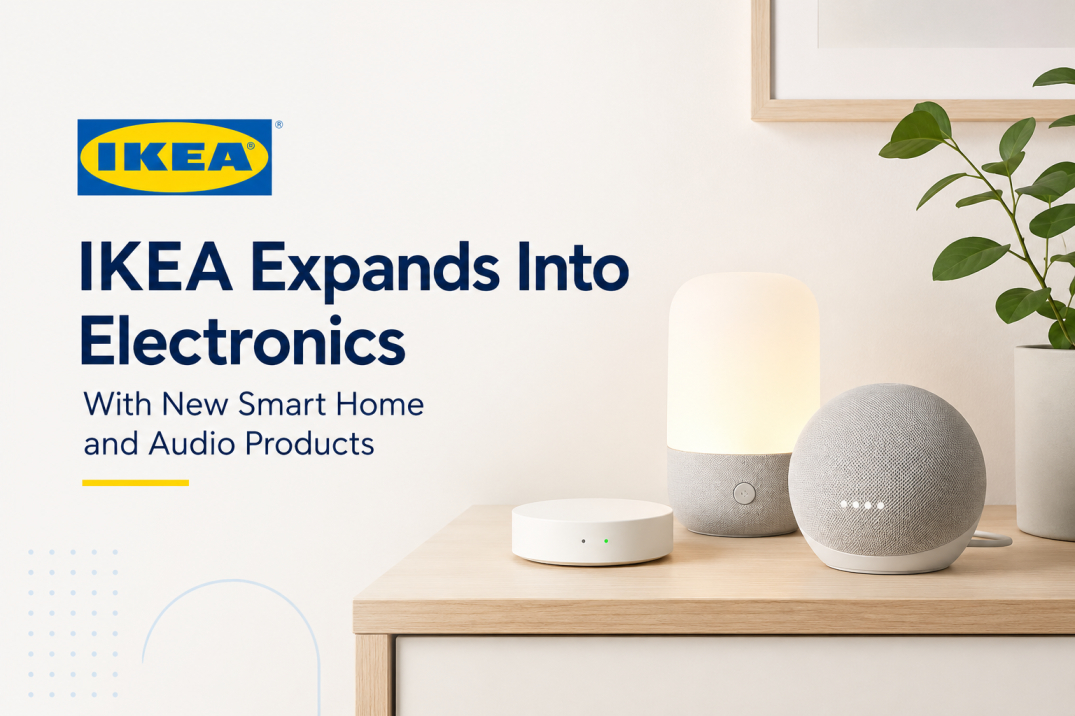
Swedish furniture giant IKEA is significantly expanding its electronics and smart home business with a growing lineup of affordable connected devices, Bluetooth speakers, smart lighting systems, sensors, and Matter-compatible home technology.
The company, traditionally known for furniture and home decor, is now positioning itself as a major player in the smart home industry by combining technology with its minimalist Scandinavian design philosophy.
Recent announcements from IKEA reveal that the company is investing heavily in electronics designed to make smart home technology more accessible, affordable, and easier for everyday consumers to use.
IKEA’s Biggest Push Into Electronics Yet
Over the past few years, IKEA has slowly experimented with smart lighting, speakers, and connected home devices. However, 2025 and 2026 mark the company’s most aggressive expansion into electronics so far.
IKEA recently announced more than 20 new smart home products built around the Matter smart home standard.
The new product categories include:
- Smart bulbs
- Motion sensors
- Air quality monitors
- Humidity sensors
- Water leakage detectors
- Smart plugs
- Wireless remotes
- Bluetooth speakers
- Smart lighting systems
The company says its goal is to make smart home technology simpler and more affordable for mainstream consumers.
IKEA Is Focusing on Matter-Compatible Smart Devices
One of the biggest changes in IKEA’s electronics strategy is full support for Matter, the universal smart home connectivity standard.
Matter allows devices from different brands to work together more seamlessly across platforms like:
- Apple Home
- Google Home
- Amazon Alexa
- Samsung SmartThings
IKEA’s updated electronics lineup is designed to integrate more easily into existing smart home ecosystems without requiring complicated setup processes.
The company also upgraded its DIRIGERA smart home hub to function as a Matter Controller and Matter Bridge, allowing older IKEA smart products to remain compatible with newer systems.
IKEA Launches New Bluetooth Speakers
IKEA is also expanding into audio electronics with several new Bluetooth speaker products.
The company introduced:
- NATTBAD Bluetooth speaker
- BLOMPRAKT speaker lamp
- Updated smart lighting with integrated audio features
The NATTBAD speaker adopts a retro-inspired design while focusing on affordability and simplicity. Meanwhile, the BLOMPRAKT combines a table lamp with built-in speaker functionality.
IKEA says it wants home electronics to become part of interior design instead of devices people try to hide away.
IKEA Ends SYMFONISK Partnership With Sonos
As IKEA expands its independent electronics strategy, the company is also ending its well-known SYMFONISK partnership with Sonos.
The SYMFONISK lineup previously included:
- Bookshelf speakers
- Speaker lamps
- Picture frame speakers
- Floor lamp speakers
IKEA confirmed that no new SYMFONISK products will be developed going forward, although existing products will continue receiving support and software updates.
This signals IKEA’s intention to gain more control over its own electronics ecosystem moving forward.
Affordable Electronics Is IKEA’s Main Strategy
Unlike companies targeting premium smart home buyers, IKEA is focusing heavily on affordability.
Many of the company’s new smart home devices are expected to cost significantly less than competing products from Apple, Google, Amazon, or Samsung.
Industry analysts believe IKEA’s biggest advantage is combining:
- Affordable pricing
- Modern Scandinavian design
- Easy usability
- Smart home compatibility
- Mass retail accessibility
This could help IKEA become one of the largest mainstream smart home brands globally.
IKEA Wants Technology to Blend Into Everyday Life
IKEA executives have repeatedly emphasized that the company still sees itself primarily as a home furnishing brand rather than a traditional electronics manufacturer.
However, IKEA believes technology can improve daily living when integrated naturally into furniture and home products.
The company’s strategy focuses on:
- Minimalist design
- Simplicity
- Accessibility
- Everyday functionality
- Seamless home integration
Instead of creating highly technical devices, IKEA wants smart technology to feel approachable for regular households.
Consumer Reactions Have Been Mixed
While many consumers appreciate IKEA’s affordable approach to smart home products, some early users have reported issues involving:
- Connectivity reliability
- Matter compatibility problems
- Device syncing bugs
- Smart speaker software stability
Some Reddit users praised the low pricing and simplicity, while others criticized stability problems in early Matter-based devices.
Despite the criticism, IKEA continues rapidly expanding its electronics division.
IKEA’s Future in Electronics
Industry experts believe IKEA may continue expanding into additional electronic product categories over the next few years.
Potential future categories could include:
- Smart kitchen devices
- Home security systems
- Smart appliances
- Connected furniture
- AI-powered home automation
- Advanced audio systems
As smart homes become more mainstream, IKEA appears determined to become one of the biggest affordable smart home brands worldwide.
Final Thoughts
IKEA’s expansion into electronics represents a major shift for the company. What began as simple smart lighting products has evolved into a broader strategy involving connected home ecosystems, audio products, sensors, and smart automation devices.
By focusing on affordability, design, and accessibility, IKEA is trying to make smart home technology more mainstream for everyday consumers rather than only tech enthusiasts.
If the company can improve software stability and ecosystem reliability, IKEA could become one of the most influential names in affordable smart home electronics over the next few years.