What if your next computer had no screen, no keyboard and no monthly AI subscription? That is the idea behind Ghost Core, a new personal AI computer designed to run AI agents continuously on dedicated hardware.
Developed by San Francisco-based startup Ghost, Core puts powerful local AI hardware inside a compact desktop computer. Instead of using it like a traditional PC, users interact with its AI through a phone or app. As a result, the system can work in the background while users focus on other tasks.
Ghost emerged from stealth with $11 million in funding, led by Andreessen Horowitz. Meanwhile, the company is positioning Core as a new type of personal computer built around AI agents rather than traditional applications.
What Is Ghost Core AI Computer?
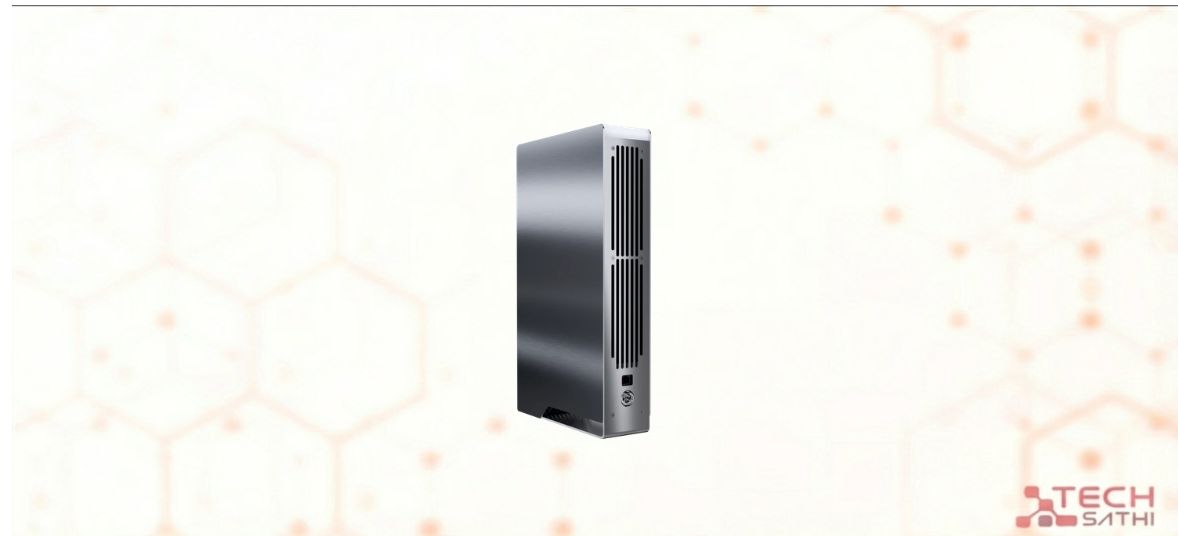
Ghost Core AI Computer is a screenless personal computer built specifically for AI agents.
Traditional computers wait for users to open applications and perform tasks. In contrast, Core is designed to keep AI agents running in the background. These agents can understand information, remember context and perform tasks across connected services.
The company describes Core as a “personal AI computer” that runs models entirely on the device. It can connect with apps, files and other devices while continuously processing information.
In simple terms, Core is less like a conventional desktop PC and more like an AI assistant that lives on your desk.
A Computer Without a Screen
The most unusual part of Ghost Core is also the easiest to understand.
There is no screen.
Instead, Core is designed to run quietly in the background. Users can access its AI through a phone or application rather than sitting in front of the computer with a monitor.
Because of this approach, Ghost wants users to think less about traditional computer interfaces and more about what their AI can accomplish.
Instead of asking, “What can I do on this computer?” users can ask, “What can my AI do for me?”
The company has described the device as a “brain in a box.”
AI Runs Directly on the Device
One of Ghost Core’s biggest selling points is local AI.
Rather than sending every request to a cloud service, Core runs its AI models directly on the device. Ghost says the system can keep models, memory and personal information on the computer.
This approach could appeal to users who do not want their personal information constantly processed by external AI platforms.
In addition, Ghost says Core does not require a monthly subscription. Users pay for the hardware rather than renting access to the AI every month.
That model makes the initial purchase more expensive. However, heavy AI users may find the lack of recurring fees attractive over time.
Powerful NVIDIA GPU for Local AI
To make local AI possible, Ghost has equipped Core with an NVIDIA RTX PRO 4000 Blackwell SFF Edition.
The GPU includes 24GB of GDDR7 ECC memory and 432GB/s of memory bandwidth. Alongside it, the system includes an AMD Ryzen 5 7600 processor, 64GB of DDR5 memory and a 1TB NVMe SSD.
That is considerably more serious hardware than what you would normally expect from a small AI assistant.
More importantly, the dedicated GPU gives Core the hardware needed to handle demanding local AI workloads.
Multiple AI Models Built In
Ghost Core comes with several AI models designed for different workloads.
Ghost lists models including:
- Qwen 3.8-Next
- Qwen 3.8-27B
- Gemma 4-31B
- Muse-Glimmer-30B
Because these models run locally, Core can provide AI capabilities without sending every prompt to a remote AI server. That gives users greater control over how their AI operates.
What Can Ghost Core Actually Do?
The biggest reason to buy Core is not its hardware.
Instead, the main attraction is the AI agents running on that hardware.
Ghost says Core can connect with a user’s:
- Apps
- Files
- Browser
- Smart-home devices
- Other connected devices
- Personal information
The system can then build context over time and use that information to assist with tasks.
For example, an AI agent could help organize files, work with applications or automate repetitive tasks. The company says Core is designed to work continuously rather than waiting for a user to manually start every task.
Privacy Is a Major Selling Point
Privacy is another important part of Ghost’s strategy.
Ghost says personal data can remain on the device and that the system uses encryption to protect information. Furthermore, the company says its architecture is designed so that Ghost itself cannot access personal data stored on Core.
However, some connected features can still use online services. Therefore, users should understand the privacy settings and connected services before giving an AI agent access to sensitive information.
No Monthly AI Subscription
Most popular AI assistants operate through subscriptions.
Ghost takes a different approach by charging for the hardware instead. Core costs $3,499, but Ghost says users do not need a monthly subscription for the device.
That makes the upfront cost extremely high. On the other hand, people who use AI heavily may prefer a one-time hardware purchase over another recurring subscription.
Who Is Ghost Core For?
Ghost Core is not designed for everyone.
AI Enthusiasts
People who want to experiment with powerful local AI models could find Core interesting.
Developers
For developers working with AI agents, dedicated hardware with substantial GPU memory could provide a useful local testing environment.
Privacy-Focused Users
Users who prefer keeping personal AI data on their own hardware may find the local-first approach attractive.
Power Users
Meanwhile, power users who want AI agents working continuously across apps and files could benefit most from Core’s always-on design.
For a typical student or casual PC user, however, $3,499 is difficult to justify.
Ghost Core vs Traditional PC
| Feature | Ghost Core | Traditional PC |
|---|---|---|
| Screen | No | Usually required |
| Main purpose | AI agents | General computing |
| Local AI | Core focus | Depends on hardware |
| AI models | Built in | User chooses |
| AI subscription | No | Depends on service |
| Continuous AI | Yes | Not normally the main purpose |
| Apps & files | Connected | Local |
| User interface | Phone/app + AI | Monitor, keyboard and mouse |
| Starting price | $3,499 | Varies widely |
Ghost Core Price and Availability
Ghost Core costs $3,499 in the United States.
According to launch information, the first batch is open for orders, with shipping expected in late October 2026.
Ghost has not announced an official Nepal price or local launch.
Expected Price in Nepal
At $3,499 before Nepal taxes, shipping and local distribution costs, Core would likely sit above NPR 500,000 if imported into Nepal.
For now, however, there is no official Nepal pricing, so this figure should only be treated as an estimate.
Frequently Asked Questions
Ghost Core is a screenless personal AI computer designed to continuously run AI agents locally.
Ghost Core costs $3,499.
No. Core is designed without a display and is controlled through a phone or application.
No. Ghost says Core does not require a subscription.
Its core AI models run on the device. However, some connected online features can use external services depending on the task.
It uses an NVIDIA RTX PRO 4000 Blackwell SFF Edition with 24GB GDDR7 ECC memory.
Not completely. Core is designed primarily as an AI machine rather than a conventional screen-based PC.
Final Verdict
Ghost Core is one of the strangest PCs of 2026 — and that is exactly what makes it interesting.
Instead of focusing on a screen, keyboard and mouse, the device puts AI agents at the center of the experience.
Its local-first architecture, powerful GPU and subscription-free approach make it different from conventional AI PCs. However, the $3,499 price remains a major barrier.
Ghost is essentially betting that personal computing will move away from opening apps and clicking buttons. Instead, users could simply tell an AI agent what they want and let the computer handle the work.
Overall, Ghost Core could become an early example of a new category: the personal AI computer. Whether that vision becomes mainstream will depend on how useful its AI agents are in everyday life.