
Introduction
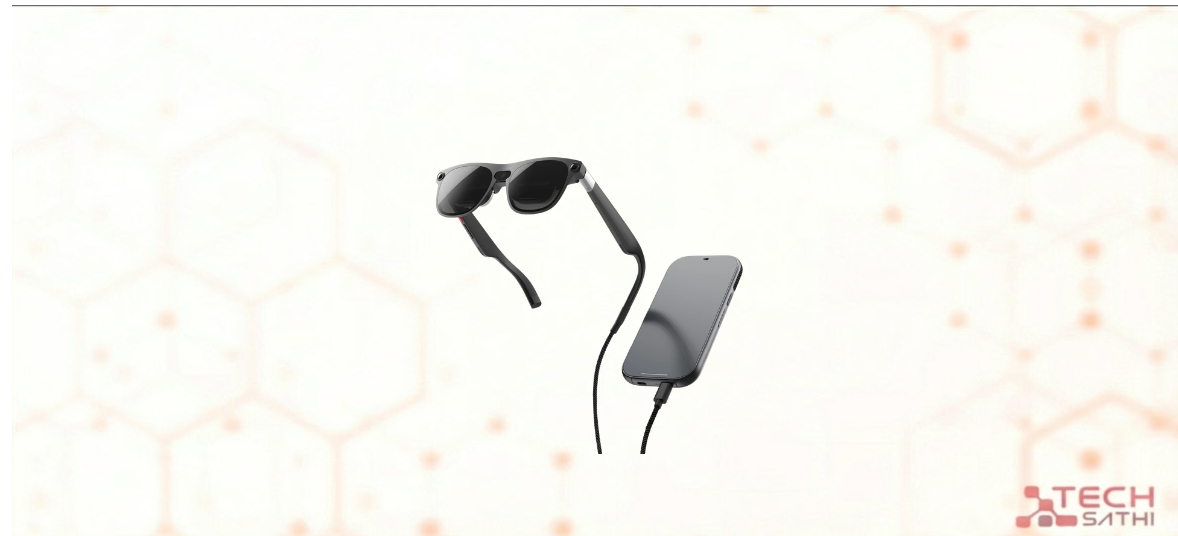
The XREAL AURA is a new category of wearable technology: lightweight XR glasses that bring Android apps, entertainment, gaming, and Gemini AI into the user’s field of view. Developed in collaboration with Google and Qualcomm, AURA combines transparent optical displays with a separate computing puck.
Unlike conventional VR headsets, AURA lets users see the real world directly through its transparent lenses while viewing digital content in front of them. It also features a 70-degree field of view, Sony Micro-OLED displays, hand tracking, and a split-compute design.
The product launched on October 28, 2026, with orders initially opening in selected markets. Its promotional launch price starts at US$1,099 for the 12GB RAM and 256GB storage configuration through the end of 2026.
Overview
What is the XREAL AURA?
The XREAL AURA is a pair of extended reality (XR) glasses powered by Google’s Android XR platform.
It combines a lightweight glasses-style display with a separate computing puck. The glasses project digital content onto transparent lenses, while the puck handles processing, battery power, and connectivity.
Users can view Android apps, watch videos, play games, work with multiple virtual screens, and interact with Google’s Gemini AI.
Unlike a traditional VR headset, AURA uses optical see-through technology. Therefore, users can see their actual surroundings instead of relying on camera footage displayed inside a headset.
Who is it for?
The XREAL AURA is designed for:
- Technology enthusiasts
- Android XR users
- Remote workers
- Professionals who need multiple virtual screens
- Gamers
- Movie and streaming enthusiasts
- Developers building XR applications
- Users interested in AI-powered wearable technology
Why does it matter?
The XREAL AURA represents Google’s broader push into Android XR.
It brings Android apps and Gemini AI into a wearable format while keeping the glasses relatively lightweight. Moreover, its separate computing puck handles demanding processing tasks instead of placing all the hardware inside the glasses.
As a result, AURA aims to combine spatial computing with a more familiar glasses-style design.
XREAL AURA Specifications
| Feature | Details |
|---|---|
| Product Type | Android XR Smart Glasses |
| Display Technology | Sony Micro-OLED |
| Resolution | 1920 × 1200 pixels per eye |
| Refresh Rate | Up to 120Hz |
| Field of View | 70° |
| Peak Brightness | 1,050 nits |
| Pixel Density | 32 PPD |
| Colour Gamut | 100% sRGB |
| Colour Accuracy | ΔE below 3 |
| Optical Technology | Optical See-Through |
| Spatial Tracking | 6DoF |
| Hand Tracking | Yes |
| Dimming | Electrochromic, 5 levels |
| Glasses Processor | XREAL X1S Spatial Coprocessor |
| Main Processor | Snapdragon Reality Elite platform |
| Operating System | Android XR |
| AI Assistant | Google Gemini |
| RAM Options | 12GB / 16GB |
| Storage Options | 256GB / 512GB |
| Battery | 4,455mAh computing puck |
| Wireless | Wi-Fi 6/6E, Bluetooth 5.3 |
| Audio | Bose-tuned audio, spatial audio |
| Microphones | 4-microphone array |
| Glasses Weight | Approximately 95g |
| Computing Puck | Separate portable unit |
| Connectivity | USB-C, DisplayPort input |
| Prescription Support | Insertable prescription lens frame |
Specifications are based on XREAL’s official product information. The glasses and computing puck are separate components, so their weights and specifications should not be confused.
Android XR Platform
The biggest feature of the XREAL AURA is its integration with Android XR.
Android XR is Google’s platform for extended reality devices. It brings familiar Android applications into spatial environments and supports experiences designed specifically for XR.
With AURA, users can access apps from Google Play, including more than 150 applications developed for XR experiences.
The platform supports:
- Multiple floating app windows
- Spatial multitasking
- Immersive video playback
- XR games
- Google Gemini assistance
- Android applications
- Laptop screen mirroring
Users can arrange multiple windows around their field of view. For example, they can keep a browser open alongside work documents and a music application.
This makes AURA more than a wearable display. It is designed to function as a portable spatial computing environment.
Display & Visual Experience
70-Degree Field of View
The XREAL AURA features a 70-degree field of view.
This gives digital content more space within the user’s vision. Consequently, users can view larger virtual screens and arrange multiple applications without constantly switching between them.
The glasses use transparent lenses, allowing users to see the physical environment while viewing digital content.
Sony Micro-OLED Display
AURA uses Sony Micro-OLED displays with a resolution of 1920 × 1200 pixels per eye.
It also supports refresh rates of up to 120Hz.
The display specifications include:
- 1920 × 1200 resolution per eye
- Up to 120Hz refresh rate
- 1,050-nit peak brightness
- 32 pixels per degree
- 100% sRGB colour gamut
- ΔE below 3 colour accuracy
The high refresh rate helps deliver smoother motion, while the Micro-OLED technology supports detailed visuals.
Electrochromic Dimming
Another important feature is electrochromic dimming.
It allows users to adjust the transparency of the lenses across five levels. This helps them control how much of the surrounding environment remains visible.
For example, users can reduce transparency when watching a movie or working on a virtual screen. They can also increase transparency when they want to remain more aware of their surroundings.
XREAL says the dimming system can block up to 99.9% of external light at its highest setting.
Gemini AI Features
The XREAL AURA integrates Google’s Gemini AI directly into its Android XR experience.
Instead of interacting with an AI assistant only through a phone or computer, users can ask Gemini questions about their surroundings and the digital content displayed in their field of view.
Context-Aware AI Assistance
Gemini can understand what users see and do across compatible applications.
For example, users can ask questions about an object in front of them, request help with information on their screen, or get assistance while using compatible apps.
The glasses also include a world-facing sensor array that supports AI perception and spatial interactions.
Gemini Across Applications
Gemini is designed to work alongside multiple applications.
Users can ask it to help organise virtual windows, understand displayed information, or provide suggestions based on their current activity.
Google also demonstrated Gemini interacting with content from a connected laptop.
These capabilities make AURA particularly interesting for productivity and hands-free assistance.
However, AI features depend on software support, permissions, account requirements, and internet connectivity.
Split-Compute Architecture
The XREAL AURA uses a split-compute design.
Instead of placing all processing hardware inside the glasses, XREAL separates the system into two components:
- The lightweight XR glasses
- The portable computing puck
XREAL X1S Spatial Coprocessor
The glasses contain the XREAL X1S Spatial Coprocessor.
It handles spatial display processing, sensor information, and low-latency XR experiences.
XREAL lists motion-to-photon latency at approximately 3ms.
This architecture helps keep the glasses lightweight while maintaining responsive spatial interactions.
Snapdragon Reality Elite Platform
The computing puck contains Qualcomm’s Snapdragon Reality Elite platform.
It handles the main Android XR processing workload, AI tasks, and connectivity.
The platform also provides up to 48 TOPS of AI processing capability.
By moving the main computing hardware into a separate unit, XREAL can reduce the weight and heat generated around the user’s face.
Productivity & Virtual Workspace
The XREAL AURA aims to make virtual screens more practical for everyday work.
Users can open multiple applications and position them around their field of view.
For example, a user could:
- Keep a browser open on one side
- Read documents in another window
- Play music in a separate application
- Use a Bluetooth keyboard and mouse
- Arrange virtual screens around their workspace
The computing puck can also function as a touchpad for navigation.
Wired Laptop Mirroring
AURA supports wired laptop mirroring through USB-C.
Users can connect a compatible laptop with a USB-C cable that supports video output. The laptop display then appears as a virtual window inside the XR environment.
This allows users to work with their laptop screen alongside Android XR applications.
Moreover, Google says Gemini can interact with content in the mirrored laptop window, subject to supported features and permissions.
This could make AURA useful for people who want a private, portable multi-screen workspace.
Entertainment & Streaming
The XREAL AURA also works as a personal entertainment display.
Users can access services such as YouTube, Google TV, and other compatible streaming applications through Android XR.
Because the glasses create a large virtual viewing area, users can watch content without carrying a large physical display.
Immersive Video
AURA supports immersive content, including 180-degree and 360-degree videos.
It can also display compatible 3D movies and XR experiences.
Google has highlighted spatial view, which can turn supported videos, photos, and games into 3D experiences.
Window Follow Mode
Window Follow Mode keeps selected applications positioned in front of the user.
When users move around, the application can remain within their field of view. It can also shift into a smaller view near the edge of their vision to help keep the user’s path clear.
These features make the glasses suitable for watching content while travelling or relaxing.
Gaming Experience
The XREAL AURA brings Android gaming and XR games into a wearable display.
Users can access thousands of compatible mobile and tablet games through Google Play.
It also supports wired mirroring from compatible PCs, handheld gaming devices, and consoles.
This allows users to view games on a large virtual screen while keeping other applications open.
XR Games
AURA also supports games designed specifically for extended reality.
These experiences can use hand tracking and spatial interactions rather than relying only on traditional controllers.
Google has highlighted titles such as Fallout Factions and Project Hail Mary: Journey Among the Stars as part of its launch content.
Users can also connect supported Bluetooth game controllers for compatible games.
Design & Comfort
The XREAL AURA follows a glasses-style design rather than the larger form factor of traditional VR headsets.
The glasses weigh approximately 95 grams, according to XREAL’s product specifications.
However, users also need to carry the separate computing puck, which contains the main processor and battery.
Prescription Lens Support
XREAL AURA supports insertable prescription lenses.
The package includes an optical insert frame, allowing users to fit compatible prescription lenses.
XREAL also lists different fit sizes based on interpupillary distance (IPD).
The official product information lists M and L sizing options. Buyers should check the current regional fit measurements before ordering.
Sensors & Tracking
The glasses include two world-facing tracking cameras and a high-resolution camera with a privacy LED indicator.
These sensors support:
- 6DoF spatial anchoring
- Hand tracking
- AI perception
- Spatial interactions
- Environmental awareness
The camera privacy indicator helps users identify when the camera is active.
Audio Performance
The XREAL AURA features audio tuned by Bose.
It also supports Android XR spatial audio and includes a four-microphone array.
The audio system is designed for entertainment, communication, and voice interactions with Gemini.
Furthermore, the microphone array supports voice input without requiring users to hold a separate microphone.
However, users who need private listening in public spaces may prefer compatible external audio accessories.
Battery Life & Charging
The XREAL AURA places its battery inside the separate computing puck.
The puck features a 4,455mAh battery with a 34.84Wh capacity.
This design keeps the glasses lighter by moving battery hardware away from the user’s face.
The computing puck also supports USB-C charging through its dedicated charging and DisplayPort input port.
XREAL’s official product information lists support for USB Power Delivery 3.0 with PPS and a maximum charging input of 57W.
The company has not provided a single standard battery-runtime figure that applies to every use case in the product information referenced here. Actual runtime will depend on display brightness, application usage, wireless connectivity, and processing workload.
Connectivity
The XREAL AURA supports wired and wireless connections for different devices and accessories.
Wireless Connectivity
- Wi-Fi 6/6E
- Bluetooth 5.3
- GPS
- GLONASS
- Galileo
- QZSS
- BeiDou
Wired Connectivity
The computing puck includes two USB-C ports.
One connects directly to the glasses, while the other supports charging and DisplayPort input.
This setup allows users to connect compatible laptops and other devices that support DisplayPort video output.
AURA also supports Bluetooth keyboards, mice, and game controllers.
What’s in the Box?
The official XREAL product information lists the following items:
- XREAL AURA glasses
- Computing puck
- Glasses cable
- Charging cable
- Carrying case
- Belt clip
- Lanyard (included with select editions)
- Three pairs of nose pads
- Optical insert frame
- Cleaning cloth
- Quick Start Guide
- Safety instructions and warranty card
Package contents may vary by edition and market.
Pros and Cons
Pros
- Android XR platform
- Google Gemini integration
- 70-degree field of view
- Sony Micro-OLED displays
- 1920 × 1200 resolution per eye
- Up to 120Hz refresh rate
- Optical see-through technology
- Electrochromic dimming
- 6DoF spatial tracking
- Hand tracking
- Bose-tuned audio
- Virtual multi-screen productivity
- Wired laptop mirroring
- Prescription lens support
- Separate computing puck keeps the glasses lighter
Cons
- Premium pricing
- Requires a separate computing puck
- Wired connection between glasses and puck
- Battery life depends on usage
- Availability is limited to selected launch markets
- Some XR features depend on application and regional support
- Not designed as a standalone, wireless VR headset
XREAL AURA Price in Nepal & Availability
Price in Nepal
XREAL has announced the following international pricing for the AURA:
| Configuration | Launch Price (USD) | Regular Price (USD) |
|---|---|---|
| 12GB RAM + 256GB Storage | $1,099 | $1,279 |
| 16GB RAM + 512GB Storage | $1,299 | $1,499 |
The promotional prices apply through the end of 2026. After that, the regular prices are expected to apply.
An official Nepal price has not been announced. Based on the launch prices and a rough currency conversion, the starting price would be around NPR 1.58 lakh before import duties, taxes, and retailer costs. Therefore, the final Nepal retail price could be considerably higher.
| Product | Expected Price in Nepal |
|---|---|
| XREAL AURA 12GB + 256GB | To be announced |
| XREAL AURA 16GB + 512GB | To be announced |
These are not confirmed Nepal retail prices. Buyers should wait for official local pricing before making a purchase decision.
Availability in Nepal
XREAL AURA launched initially in selected markets, including the United States, Canada, Japan, and South Korea. The company has indicated that additional markets may follow in 2027.
As of November 2026, an official Nepal launch or confirmed local retail listing has not been announced. Interested buyers in Nepal should check with XREAL’s official sales channels and local electronics retailers for future availability, warranty support, and pricing.
FAQ
The XREAL AURA is an Android XR-powered pair of smart glasses designed for spatial computing, entertainment, gaming, and productivity.
Yes. It uses Google’s Android XR platform through its separate computing puck.
Yes. It integrates Google Gemini, allowing users to interact with AI across supported applications and compatible visual experiences.
It offers a 70-degree field of view.
It uses Sony Micro-OLED displays with a resolution of 1920 × 1200 pixels per eye and a refresh rate of up to 120Hz.
Yes. The glasses connect to a separate computing puck that contains the main processor and battery.
Yes. It supports wired laptop mirroring through a compatible USB-C connection with video output.
Yes. Users can play compatible Android games, XR games, and games mirrored from supported PCs, handheld devices, or consoles.
Yes. It supports insertable prescription lenses through its optical insert frame.
The official Nepal price has not been announced. Its international launch price starts at US$1,099 for the 12GB RAM and 256GB storage configuration during the promotional period.
Final Verdict
Should You Buy the XREAL AURA?
The XREAL AURA is an interesting step forward for wearable computing.
Its combination of Android XR, Google Gemini, Sony Micro-OLED displays, a 70-degree field of view, and a separate Snapdragon-powered computing puck creates a different experience from traditional smart glasses.
For productivity, it offers virtual multi-screen workspaces and wired laptop mirroring. Meanwhile, its entertainment and gaming features give users access to Android applications and immersive XR content.
However, its premium pricing and wired computing-puck design may not appeal to everyone. It is also important to remember that AURA is not a fully wireless standalone VR headset.
Best For
- Android XR enthusiasts
- Remote workers
- Developers
- Gamers
- Frequent travellers
- Movie and streaming enthusiasts
- Users interested in spatial computing
- People who want a private virtual display
Final Thought
The XREAL AURA brings Android XR and Gemini AI into a glasses-style form factor. Its optical see-through display keeps the real world visible while placing digital applications and entertainment within the user’s field of view.
Although its high price and separate computing puck make it a premium product, AURA could become an important device in the next generation of spatial computing.