Introduction
What if your everyday life felt like playing an open-world video game? Imagine walking around your neighbourhood, discovering new places, meeting people, and completing everyday activities while progressing through a game.
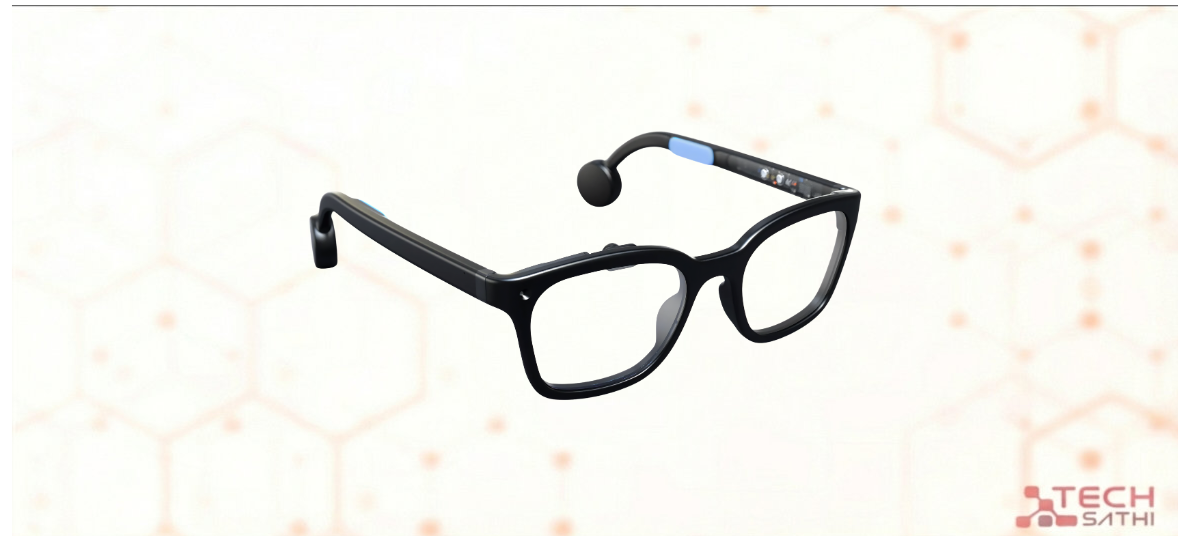
That is the idea behind the Brilliant Labs Halo, an AI-powered pair of smart glasses designed to combine artificial intelligence, gaming, and real-world experiences.
Unlike traditional gaming devices, Halo brings gameplay into the physical world. Its flagship gaming experience, called Narrative, transforms everyday exploration into an evolving digital adventure. As users explore their surroundings, their activities and discoveries can influence the game.
However, gaming is only one part of the experience. Halo also features a full-colour microOLED display, an AI companion called Noa, bone-conduction speakers, and an open-source platform.
With these features, Brilliant Labs aims to make smart glasses more interactive, personal, and useful throughout the day.
Overview
What are Brilliant Labs Halo Smart Glasses?
The Brilliant Labs Halo is an AI-powered wearable designed to provide hands-free assistance and interactive digital experiences.
Unlike conventional smart glasses that mainly focus on photography, audio playback, and notifications, Halo puts artificial intelligence and real-world interaction at the centre of its experience.
It features a small display that shows information within the user’s field of view. Additionally, it connects with Noa, Brilliant Labs’ AI companion, which can answer questions, remember context, and support different applications.
Its biggest attraction, however, is Narrative. This gaming experience connects the digital world with the user’s real-world activities, creating a more interactive way to play.
Who are they for?
The Halo smart glasses are designed for:
- Technology enthusiasts
- AI and smart-glasses users
- Casual gamers
- Augmented reality enthusiasts
- Developers and creators
- Users interested in personal AI assistants
- People who enjoy interactive real-world experiences
Why do they matter?
Most gaming experiences take place on smartphones, computers, or gaming consoles. However, Halo explores a different approach by making the user’s surroundings part of the gameplay.
Furthermore, its open-source platform gives developers and users more opportunities to experiment with applications and custom experiences.
As a result, Halo stands out as an interesting addition to the growing smart-glasses market.
Brilliant Labs Halo Specifications
| Feature | Details |
|---|---|
| Product Type | AI Smart Glasses |
| Display | 0.2-inch Full-Colour MicroOLED |
| AI Assistant | Noa AI |
| Gaming Experience | Narrative |
| Audio | Bone-Conduction Speakers |
| Microphones | Built-in Microphones |
| Visual Sensor | Low-Resolution Image Sensor |
| Processing | On-Device AI Processing |
| Connectivity | Bluetooth 5.3 |
| Battery Life | Up to 14 hours |
| Weight | Just over 40g |
| Software Platform | Open-Source Hardware and Software |
| Applications | Noa App and Community Applications |
| Price | US$399 announced launch price |
| Nepal Price | To be announced |
Specifications are based on Brilliant Labs’ launch information. Actual battery life and feature availability may vary depending on usage and software updates.
Performance & AI Features
Noa AI: Your Personal AI Companion
One of the main highlights of Halo is Noa, Brilliant Labs’ personal AI companion.
Users can communicate with Noa naturally through voice. For example, they can ask questions, explore ideas, and get information without constantly taking out their smartphones.
What makes Noa particularly interesting is its focus on long-term memory. Instead of treating every conversation as a separate interaction, it can build context around previous conversations, preferences, and experiences.
Consequently, the AI assistant can provide more personalised responses over time.
For instance, users could ask Noa to recall information from an earlier conversation or help organise ideas they previously discussed.
Moreover, Brilliant Labs highlights its focus on private, on-device processing. This approach aims to reduce the need to send personal information to cloud services for core experiences.
Narrative: Turning Real Life Into a Video Game
The most exciting feature of Halo is Narrative, its flagship gaming experience.
Narrative transforms everyday surroundings into an open-world game. Instead of controlling a character through a traditional controller, users explore their physical environment and interact with the digital world through their activities.
The experience includes:
- A personalised digital character
- A game-like world based on real-world locations
- Non-player characters (NPCs)
- Exploration and discovery
- Progression and character development
- Interactions influenced by everyday activities
As users move around their surroundings, they can discover different elements of the game environment. Furthermore, their activities and decisions help shape the experience over time.
This creates a different approach to gaming. Rather than spending the entire experience in front of a screen, users can explore the physical world while interacting with digital elements.
Ask, Make and Play
Brilliant Labs describes Halo’s experience through three main activities.
Ask: Users can talk to Noa, ask questions, explore ideas, and receive contextual assistance. Additionally, its memory system helps conversations build on previous interactions.
Make: Users can create mini-apps and custom workflows using voice instructions. For example, they can describe what they want to build without needing traditional coding skills. Brilliant Labs also plans to let users share their creations through the Halo community’s app store.
Play: This is where Narrative comes in. Users can turn everyday activities into an evolving game experience. Meanwhile, their decisions and discoveries can influence the digital world.
Together, these three activities make Halo more than a conventional pair of smart glasses.
Display & Visual Experience
The Brilliant Labs Halo features a 0.2-inch full-colour microOLED display.
The display projects information into the user’s peripheral vision, allowing them to view contextual details without constantly looking at a smartphone.
However, this small display focuses on quick information access rather than replacing a large smartphone or tablet screen.
It can show information related to AI interactions and compatible applications while helping Brilliant Labs maintain a relatively lightweight design.
Additionally, the display plays an important role in Narrative by connecting the digital interface with the physical world.
Design & Build Quality
Brilliant Labs designed Halo as an everyday wearable rather than a bulky virtual-reality headset.
The glasses weigh just over 40 grams, making them relatively lightweight for a device that combines a display, microphones, speakers, sensors, battery, and computing hardware.
Moreover, the company focuses on balanced construction and comfort for extended use.
Lightweight Design
At just over 40g, Halo aims to remain comfortable during everyday activities.
For example, users can wear the glasses while walking, exploring new places, or interacting with the AI assistant.
Built for Everyday Use
The glasses combine several components inside a familiar eyewear design:
- Full-colour microOLED display
- Built-in microphones
- Bone-conduction speakers
- Visual sensor
- Battery
- Wireless connectivity
- AI processing hardware
As a result, users can access AI and gaming features without carrying a separate headset.
Audio & Connectivity
Halo includes built-in microphones and bone-conduction speakers.
Unlike conventional headphones, bone-conduction audio delivers sound through vibrations. This allows users to receive audio feedback while keeping their ears more open to surrounding sounds.
Consequently, users can interact with Noa and listen to compatible audio while remaining more aware of their environment.
For wireless connectivity, the glasses support Bluetooth 5.3 and work with the Brilliant Labs Noa smartphone application.
The Noa app acts as a companion platform for controlling the AI assistant and accessing compatible applications. Therefore, it plays an important role in the overall Halo experience.
Privacy & Open-Source Technology
Privacy is an important part of Brilliant Labs’ approach to Halo.
According to the company, the glasses use on-device processing for core experiences. This reduces their reliance on cloud-based processing and helps limit the transfer of personal information.
Halo also uses a low-resolution image sensor to understand the user’s surroundings. However, Brilliant Labs says this sensor focuses on providing visual context rather than functioning as a traditional camera for photography or video.
The company states that the glasses process images privately on-device, immediately discard them, and do not store them.
This approach aims to address privacy concerns associated with camera-equipped smart glasses.
Open-Source Hardware and Software
Another major highlight is Halo’s open-source foundation.
Brilliant Labs says both the hardware and software follow an open-source approach. Therefore, developers and creators can experiment with the platform and develop their own applications.
Additionally, users can create mini-apps and workflows through Noa, making the device more flexible than a closed smart-glasses ecosystem.
Through community contributions and new applications, Brilliant Labs hopes to expand the platform over time.
Battery Life
Battery life remains an important consideration for wearable technology.
Brilliant Labs claims that Halo can deliver up to 14 hours of battery life.
This runtime aims to support everyday use, including AI interactions, audio, and other smart-glasses features.
However, actual battery performance depends on how frequently users access the display, AI assistant, audio, and connected applications.
Therefore, users should treat the 14-hour figure as the company’s stated maximum rather than a guaranteed runtime under every usage condition.
Brilliant Labs Halo vs Traditional Smart Glasses
Traditional smart glasses often focus on features such as voice assistance, audio playback, notifications, and photography.
In contrast, Halo combines these wearable functions with an interactive AI companion and real-world gaming.
| Feature | Traditional Smart Glasses | Brilliant Labs Halo |
|---|---|---|
| AI Assistant | Available on selected models | Noa AI |
| Display | Depends on the model | Full-colour microOLED |
| Gaming | Usually limited | Narrative real-world gaming |
| Audio | Varies by model | Bone-conduction speakers |
| Open-Source Platform | Not common | Yes |
| Personal AI Memory | Depends on the platform | Noa long-term memory |
| Battery Life | Varies by model | Up to 14 hours claimed |
The biggest difference is Halo’s focus on making everyday activities part of an evolving digital experience. Instead of simply adding smartphone features to eyewear, it explores a new way to combine the physical and digital worlds.
Pros and Cons
Pros
- Real-world gaming through Narrative
- Noa AI personal assistant
- Full-colour microOLED display
- Lightweight design at just over 40g
- Bone-conduction speakers
- Up to 14 hours of claimed battery life
- Bluetooth 5.3
- Open-source hardware and software
- Voice-based mini-app creation
- Privacy-focused processing approach
Cons
- Requires a compatible smartphone app
- Small display is not designed for large-screen content
- Real-world gaming depends on the software experience
- Battery life may vary with usage
- The long-term value of Narrative depends on future updates and community development
- Nepal pricing and availability have not been announced
Price & Availability
Brilliant Labs Halo Price
Brilliant Labs announced Halo at a launch price of US$399.
However, a separate GamesBeat report discussing the glasses’ initial availability cited a US$299 base price. Therefore, buyers should confirm the current price and configuration on the official Brilliant Labs store before ordering.
| Product | Price |
|---|---|
| Brilliant Labs Halo | US$399 announced launch price |
| Price in Nepal | To be announced |
Availability in Nepal
Brilliant Labs has announced international availability through its official website.
However, the company has not confirmed an official Nepal launch date, local retail price, or authorised retailer availability.
Nepal pricing may depend on import costs, taxes, shipping, and local distribution. Consequently, buyers should check the official product listing and local retailer updates before making a purchase.
FAQ
Brilliant Labs Halo is an AI-powered wearable featuring a microOLED display, Noa AI assistant, bone-conduction speakers, and an open-source hardware and software platform.
Narrative is Halo’s flagship gaming experience. It turns real-world exploration and everyday activities into an evolving open-world game.
Yes. It features Noa, a personal AI companion that supports voice conversations, contextual assistance, and long-term memory.
Yes. They feature a 0.2-inch full-colour microOLED display that projects information into the user’s peripheral vision.
Brilliant Labs claims up to 14 hours of battery life. However, actual runtime depends on usage.
Yes. Brilliant Labs describes Halo as a product built around an open-source hardware and software foundation.
Brilliant Labs says the glasses prioritise on-device processing. The company also states that its low-resolution visual sensor processes images locally and immediately discards them rather than storing them.
The launch announcement lists a price of US$399. However, a separate report has cited a US$299 base price, so buyers should verify the current official listing.
An official Nepal launch date and local retail price have not been confirmed.
Final Verdict
Should You Be Interested in Brilliant Labs Halo?
The Brilliant Labs Halo introduces an interesting idea for the future of smart glasses. Instead of simply bringing smartphone features to eyewear, it makes the real world part of the digital experience.
Its biggest attraction is Narrative, which turns everyday exploration into an evolving game. Meanwhile, Noa AI provides voice-based assistance, contextual memory, and tools for creating mini-apps.
Furthermore, the lightweight design, microOLED display, bone-conduction speakers, and open-source platform help Halo stand out in the growing AI wearables market.
However, its long-term appeal will depend on how well Narrative develops, how useful Noa becomes in everyday situations, and how much support the developer community provides.
Best For
- Smart-glasses enthusiasts
- AI technology users
- Casual gamers
- Developers and creators
- People interested in augmented reality
- Users looking for new ways to interact with AI
Final Thought
Brilliant Labs Halo is an unusual take on smart glasses. By combining personal AI, open-source technology, and real-world gaming, it explores how wearable technology could make everyday experiences more interactive.
Ultimately, Halo is not simply about seeing notifications or listening to music. It is about turning the world around you into something you can explore, interact with, and play.