
Introduction
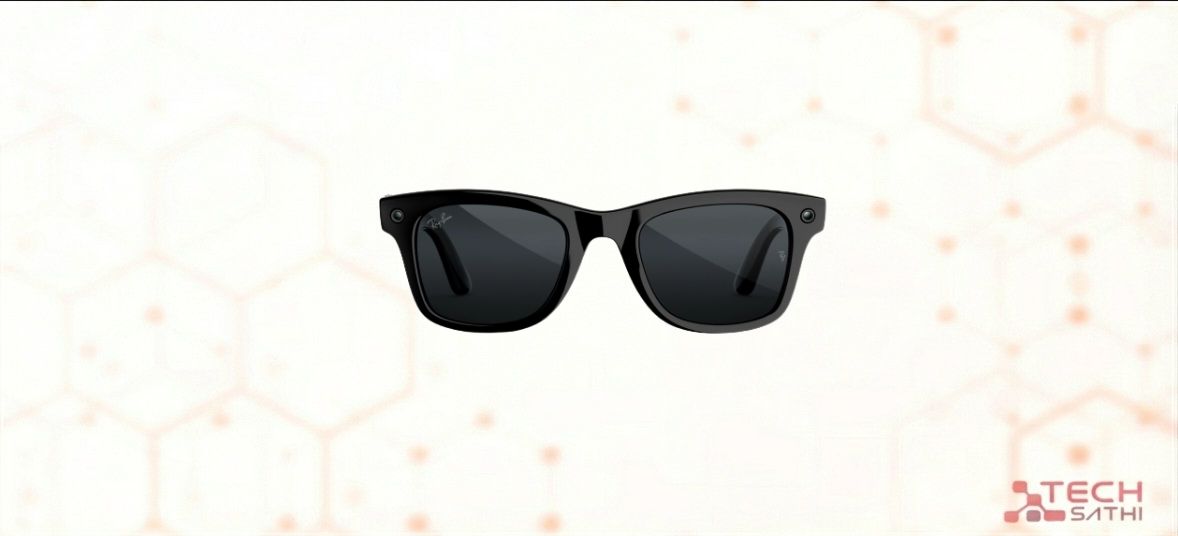
Meta is taking a different approach to AI glasses. Instead of putting another camera into smart eyewear, Meta has introduced the Ray-Ban Meta Audio. These are Meta’s first audio-only AI glasses. They remove the camera and focus on music, podcasts, calls, AI assistance, and hands-free interaction. The glasses weigh just 43 grams and can deliver up to 12 hours of battery life on a single charge. Meta has also included a charging case that provides up to another 48 hours of battery capacity.
Moreover, the glasses come in familiar Ray-Ban designs. So, they are designed to look more like everyday eyewear than a traditional technology product.
Meta Ray-Ban Meta Audio Overview
What is it?
The Ray-Ban Meta Audio is a pair of camera-free smart glasses with built-in speakers, microphones, and AI features.
Unlike Meta’s camera-equipped AI glasses, this model cannot capture photos or videos.
Instead, it focuses on audio-based experiences such as music, podcasts, calls, translation, and conversations with Meta AI.
Who is it for?
The glasses are aimed at people who want:
- Hands-free AI
- Open-ear audio
- Music and podcasts
- Hands-free calls
- Speech translation
- Everyday smart features
- Smart glasses without a camera
Why does it matter?
The lack of a camera is the biggest difference.
Users can interact with AI and listen to audio without having a camera sitting on their face. As a result, Meta is creating a different category of smart glasses focused more heavily on audio and AI.
Specifications
| Feature | Ray-Ban Meta Audio |
|---|---|
| Product Type | Camera-free AI audio glasses |
| Brand | Ray-Ban × Meta |
| Camera | None |
| Weight | 43g |
| Audio | Open-ear speakers |
| AI | Meta AI / Muse |
| Battery | Up to 12 hours |
| Charging Case | Up to 48 additional hours |
| Styles | Clubmaster, Burbank |
| Color/Lens Options | 23 combinations |
| Prescription Lenses | Supported |
| Controls | Voice + physical controls |
| Primary Use | Music, calls, AI, podcasts, translation |
| US Starting Price | $349 |
| Pre-order | September 23, 2026 |
| Shipping | October 13, 2026 |
Meta confirmed the 43g weight, 12-hour battery, 23 style/color combinations, and two launch styles in its official announcement.
Design & Build Quality
The Ray-Ban Meta Audio keeps the familiar Ray-Ban look.
Meta is launching the glasses in two styles:
- Clubmaster
- Burbank
There are 23 color and lens combinations in total.
Both styles also support a wide range of optical prescriptions. Therefore, users can potentially wear them as their regular glasses instead of switching between normal eyewear and smart glasses.
At 43 grams, they are also lighter than Meta’s camera-equipped models.
The glasses include adjustable temple tips, swappable or adjustable nose pads, and overextension hinges for improved comfort.
Camera-Free Design
The biggest feature is what Meta removed.
There is no camera.
That means the Ray-Ban Meta Audio cannot capture photos or record videos.
Instead, Meta has built the product around audio and voice interaction.
This makes the glasses different from the regular Ray-Ban Meta lineup, which uses cameras for photos, videos, and visual AI features.
For users who want smart eyewear but do not need a camera, the camera-free approach provides a simpler alternative.
Audio Experience
Audio is the main focus of the Ray-Ban Meta Audio.
The glasses use open-ear speakers, allowing users to listen without putting earbuds inside their ears.
You can use them for:
- Music
- Podcasts
- Phone calls
- AI responses
- Translated speech
At the same time, the open-ear design allows you to remain aware of your surroundings.
Meta says audio has been one of the most popular features among its AI glasses users, which is one reason the company is expanding into dedicated audio glasses.
Meta AI and Muse
The Ray-Ban Meta Audio also connects to Meta’s AI ecosystem.
Meta announced Muse, its personal AI agent, alongside the new glasses lineup.
Muse is designed to provide a more proactive AI experience. It can help users manage tasks, stay organized, and work toward longer-term goals through hands-free interaction.
Because the Ray-Ban Meta Audio has no camera, its AI experience focuses primarily on voice and audio interaction rather than visual understanding.
Calls
The glasses can also work as a hands-free calling device.
Meta says the microphones are designed to capture the user’s voice more clearly than earbuds.
As a result, users can take calls without reaching for their smartphone.
This could be particularly useful while walking, commuting, or working.
Translation
The glasses also support AI-powered translation experiences.
Users can interact with Meta AI and listen to translated speech through the built-in speakers.
Therefore, the glasses could be useful while traveling or communicating across languages.
However, supported languages and specific AI features can vary by region and software availability.
Battery Life
Battery life is one of the strongest specifications.
Meta claims up to 12 hours of use on a single charge.
The included charging case adds up to 48 additional hours of battery capacity.
That makes the glasses suitable for extended everyday use.
However, actual battery life will depend on factors such as music playback, calls, AI usage, and other connected features.
Performance & Everyday Use
Music and Podcasts
The open-ear speakers allow users to listen to music and podcasts while staying aware of their surroundings.
Hands-Free AI
Users can communicate with Meta AI through voice commands without pulling out their phones.
Calls
The built-in microphones and speakers allow hands-free phone conversations.
Translation
Supported translation features can make the glasses useful for travel and multilingual conversations.
Everyday Wear
Most importantly, the Ray-Ban Meta Audio still looks like a pair of Ray-Ban glasses.
That could make them easier to integrate into everyday life than bulkier wearable technology.
Privacy
Privacy is another important aspect of the product.
The Ray-Ban Meta Audio has no camera, so it cannot take photos or record videos.
Meta’s existing camera-equipped AI glasses use a capture LED to indicate when the camera is recording. Meta also says its camera-equipped glasses disable the camera when the capture LED is blocked or tampered with.
The new Audio model takes a different approach altogether by removing the camera hardware.
Therefore, users get AI and audio features without a camera built into the frame.
Ray-Ban Meta Audio vs Ray-Ban Meta Gen 3
| Feature | Ray-Ban Meta Audio | Ray-Ban Meta Gen 3 |
|---|---|---|
| Camera | No | 12MP |
| Video Recording | No | Up to 3K Ultra HD |
| AI | Yes | Yes |
| Music | Yes | Yes |
| Calls | Yes | Yes |
| Translation | Yes | Yes |
| Battery | Up to 12 hours | Up to 9 hours |
| Weight | 43g | Higher depending on model |
| Main Focus | Audio + AI | Camera + Audio + AI |
| Starting Price | $349 | $449 |
Meta also announced the Ray-Ban Meta Gen 3 at Connect 2026. Unlike the Audio model, Gen 3 includes a 12MP camera, 3K video recording, a six-microphone array, and up to nine hours of battery life.
Price in Nepal
The Ray-Ban Meta Audio starts at $349 in the US.
Meta has not announced an official Nepal price yet.
Based on the US price, import costs, taxes, distribution, and local retailer margins, the expected Nepal price could be around:
| Product | US Price | Expected Nepal Price |
|---|---|---|
| Ray-Ban Meta Audio | $349 | NPR 55,000–65,000 |
This is an estimated Nepal price, not an official retail price.
The final price could change once the glasses officially reach the Nepali market.
Availability in Nepal
Meta opened pre-orders for the Ray-Ban Meta Audio on September 23, 2026.
The glasses are scheduled to ship from October 13, 2026.
However, Meta has not announced an official Nepal launch date or local price.
Therefore, Nepali buyers may initially have to rely on international sellers or local importers.
Pros and Cons
Pros:
- Camera-free design
- 43g lightweight body
- Up to 12 hours of battery life
- Charging case adds up to 48 hours
- Built-in Meta AI
- Muse AI support
- Open-ear audio
- Hands-free calls
- Translation features
- Prescription lens support
- 23 color and lens combinations
- Familiar Ray-Ban designs
Cons:
- No camera
- No photo or video recording
- Nepal price is not official
- Nepal availability is not confirmed
- Some AI features may vary by region
- Battery life depends on usage
FAQ
The Ray-Ban Meta Audio are Meta’s first audio-only AI glasses. They remove the camera and focus on audio, calls, AI, podcasts, music, and translation.
No. They do not have a camera.
They provide access to Meta AI, including Meta’s newer Muse personal AI agent.
Meta claims up to 12 hours on a single charge. The charging case adds up to another 48 hours.
They start at $349 in the US.
The expected Nepal price is around NPR 55,000–65,000. However, Meta has not announced an official Nepal price.
Meta says shipping begins on October 13, 2026.
Yes. Meta says both the Clubmaster and Burbank styles support a wide range of optical prescriptions.
They serve a different purpose. The glasses combine open-ear audio with AI and hands-free calls, while earbuds generally focus more heavily on personal audio and noise isolation.
Final Verdict
Should you buy it?
The Ray-Ban Meta Audio takes a different approach to smart glasses.
Rather than adding more hardware, Meta has removed the camera and focused on the features that users can access through audio and voice.
With 43g weight, up to 12 hours of battery life, open-ear audio, hands-free calls, AI, and translation, the glasses are designed to work more like everyday eyewear.
For users who want smart glasses without a camera, the Ray-Ban Meta Audio offers a distinct alternative within Meta’s growing wearable lineup.
Best for:
- AI enthusiasts
- Music and podcast listeners
- Frequent travelers
- Users who want hands-free calls
- People interested in camera-free wearables
- Ray-Ban fans
- Users who prefer voice-based AI
Final Thought
Meta’s camera-free AI glasses show that smart eyewear does not necessarily need a camera to be useful.
The Ray-Ban Meta Audio combines AI, open-ear audio, calls, translation, and long battery life inside a familiar Ray-Ban design.
Now, the main question for Nepal is how much these glasses will cost once local availability begins.
Also read: