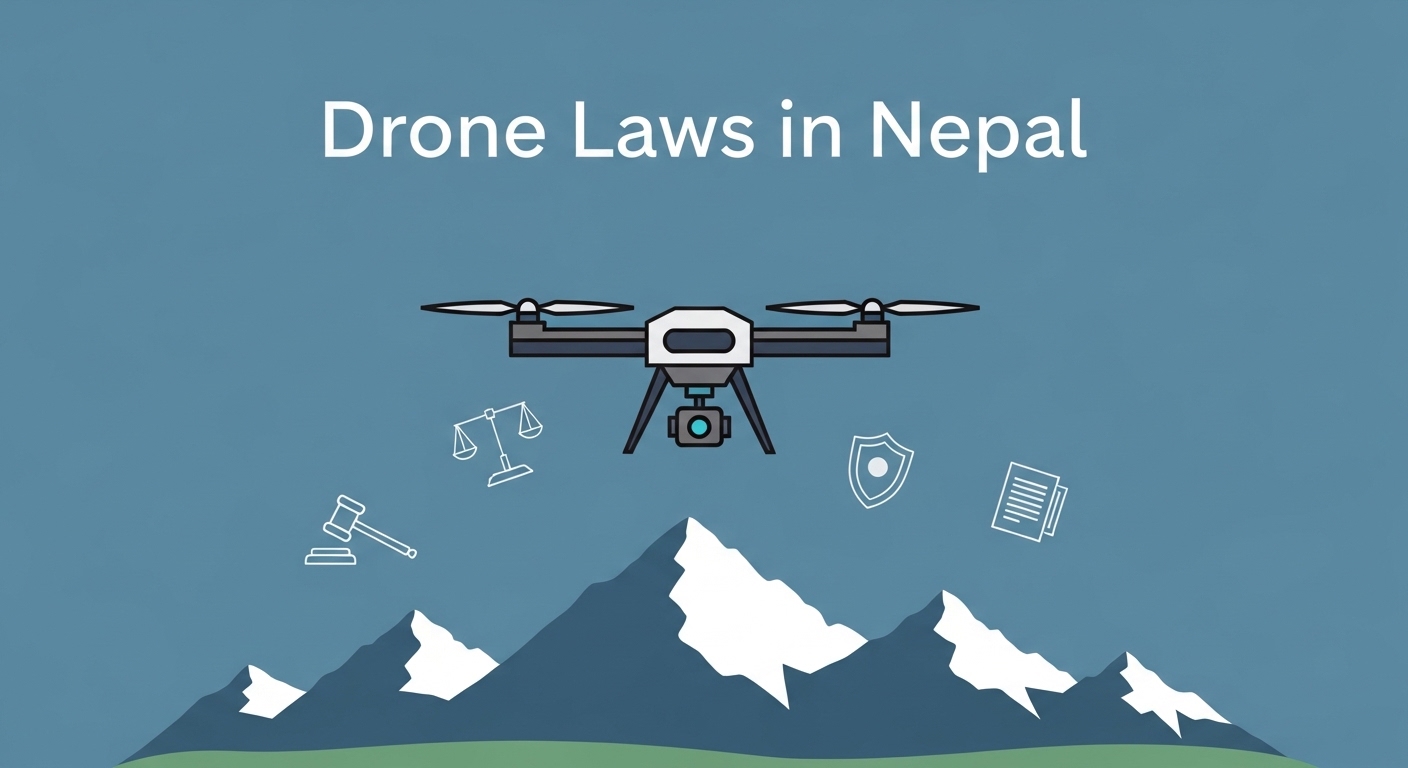
Flying a drone in Nepal gives you access to some of the most stunning landscapes in the world, from the Himalayas to historic cities. However, Nepal enforces strict drone regulations. Therefore, whether you are a hobbyist or a professional, you must understand the legal requirements before taking off.
1. Is It Legal to Fly a Drone in Nepal?
Yes, you can legally fly drones in Nepal, but you must obtain proper authorization first. If you fly without permission, authorities may fine you, confiscate your equipment, or take legal action.
In recent years, Nepal has strengthened its airspace regulations. As a result, the government now places greater emphasis on safety, privacy, and national security.
2. Drone Registration and Tracking System in Nepal
First, you must register your drone with the Civil Aviation Authority of Nepal (CAAN). After that, CAAN assigns a Unique Identification Number (UIN) to your drone. You must then attach this number visibly to your device.
In addition, Nepal has introduced a drone tracking system. This system allows authorities to identify and monitor drones in real time. Consequently, officials can trace any drone back to its registered owner.
3. Drone Categories by Weight
Authorities classify drones based on their weight, and each category follows different rules:
- Under 250 grams (Nano/Micro)
You face fewer restrictions, but you must still follow safety guidelines - 250 grams to 2 kg (Small drones)
You must register these drones, and you need permission for commercial use - 2 kg to 25 kg (Medium drones)
You must obtain multiple approvals before flying - Above 25 kg (Large drones)
Authorities tightly control these drones, and you usually need government-level clearance
4. Permits and Approvals Required
Before you fly, you must secure approvals from relevant authorities. Typically, these include:
- Civil Aviation Authority of Nepal (CAAN)
- Ministry of Home Affairs
- Department of Tourism (for filming purposes)
- Local authorities or police
To begin the process, you submit your drone details, including model, weight, and serial number. Next, you provide your purpose and flight plan. Then, you wait for approval, which usually takes several days.
5. Key Flying Rules
Even after receiving approval, you must follow strict operational rules.
Altitude and Visibility
- You must keep your drone below 200 feet (60 meters) unless authorities grant special permission
- You must always maintain visual line of sight
Restricted Areas
You cannot fly drones near:
- Airports (maintain at least a 5 km distance)
- Military installations
- Government buildings
- National parks without permits
- Religious and heritage sites
- Crowded public areas
Time Restrictions
- You cannot fly at night unless you receive special approval
6. Safety, Privacy, and Environmental Considerations
You must always operate your drone responsibly. For example:
- Avoid flying over people or moving vehicles
- Respect the privacy of others
- Protect wildlife by avoiding sensitive habitats
- Check weather conditions before flying, especially in mountainous areas
Moreover, strong winds and sudden weather changes in Nepal can affect drone stability. Therefore, you should plan your flights carefully.
7. Penalties for Violations
If you break the rules, authorities can take immediate action. For instance:
- They may impose fines ranging from NPR 2,000 to NPR 50,000 or more
- They can confiscate your drone
- In serious cases, they may pursue legal action
Therefore, you should always follow the regulations to avoid these consequences.
8. Why Nepal Introduced Drone Tracking
Nepal introduced drone tracking to manage the growing use of drones in tourism, media, and surveying. Specifically, the system helps to:
- Improve airspace safety
- Prevent unauthorized operations in sensitive zones
- Reduce interference with aircraft and rescue missions
- Strengthen national security
As a result, authorities now expect every drone in the sky to remain identifiable and traceable.
Frequently Asked Questions (FAQ)
1. Do I need permission to fly a small drone in Nepal?
Yes. Even for small drones, you must register them and obtain permission depending on your location and purpose.
2. Can tourists bring drones into Nepal?
Yes, tourists can bring drones. However, they must declare them at customs and secure permits before flying.
3. Is drone registration mandatory?
Yes. You must register all drones with CAAN and display the assigned UIN.
4. Can I fly a drone in Kathmandu?
You can fly in Kathmandu only with special permission. Since the city has airports, government buildings, and dense populations, authorities strictly control drone use there.
5. Are there areas where drones are completely banned?
Yes. You cannot fly in military zones, near airports, or in certain heritage and protected areas without special approval.
6. Can I fly a drone at night?
No. You cannot fly at night unless authorities grant special permission.
7. What happens if I fly without permission?
Authorities may fine you, confiscate your drone, or take legal action depending on the violation.
Final Thoughts
Nepal has developed a well-regulated drone ecosystem that includes registration, permits, and tracking. Although the rules may seem strict, they ensure safe and responsible drone use.
If you follow the correct procedures and respect the regulations, you can capture Nepal’s landscapes legally and safely.